Health and Safety Policy for Moss Removal Driveway Work
This policy sets out the health, safety and environmental principles our gardening team follows when carrying out moss removal on driveways and paved areas. It applies to all staff and contractors involved in driveway moss removal, surface cleaning and related landscaping tasks. The objective is to manage risks effectively, protect operatives, residents and visitors, and to minimise damage to surfaces and surrounding planting while delivering high-quality driveway moss removal services. All employees must read, understand and comply with this policy as part of routine job planning.Scope and responsibilities
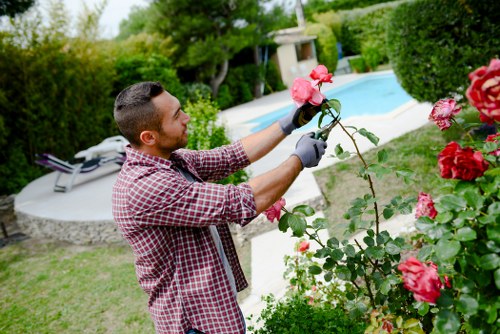
This policy covers traditional driveway moss removal, power washing, chemical treatments where used safely, mechanical scraping and brushing, and disposal of wet biomass. Management is responsible for ensuring that risk assessments are completed, training is provided, and adequate resources are available. Operatives are required to follow safe systems of work, wear specified personal protective equipment (PPE) and report hazards or incidents promptly. Supervisors must confirm site safety before work begins and ensure environmental controls are in place to protect drainage and planting.![A young woman with long brown hair and a light blue checkered shirt is pruning vibrant red roses in a garden, holding a yellow gardening spray bottle in her left hand. The garden features a well-maintained lawn with lush green grass in the foreground, bordered by flower beds filled with colorful blooms. Behind her, there are neatly trimmed hedges and a variety of leafy shrubs, along with mature trees providing dappled sunlight across the outdoor space. The overall scene suggests a peaceful, tidy garden environment typical of residential landscaping in the UK, possibly in a town such as [TOWN], within postcode [POSTCODE], highlighting services like gardening, hedge trimming, and plant care. The weather appears sunny with a bright, natural light brightening the scene, emphasizing healthy, flourishing plants and well-kept outdoor areas, aligning with professional garden maintenance standards at Moss removal driveway and related services.](/pub/_photos/gardening/f1401830904.jpg)
Risk assessment and planning
Before any moss and algae removal from driveways begins, a clear risk assessment must be completed that identifies trip and slip hazards, manual handling risks, traffic interaction, and exposure to chemicals or high-pressure water. The assessment should specify safe work methods for driveway moss cleaning tasks, control measures to eliminate or reduce risks, and emergency arrangements. Work areas need to be cordoned off, signage displayed, and pedestrian routes redirected where necessary to keep the public safe.Personal protective equipment and tools
Operatives must use appropriate PPE including non-slip safety boots, gloves, eye protection, and hearing protection when using powered equipment. Where chemicals are used a suitable respirator and chemical-resistant clothing should be available. All tools — rotary brushes, scrapers, pressure washers and vacuum units — must be inspected daily. Equipment should be maintained to manufacturer standards to prevent leaks, electrical faults or mechanical failures that could create hazards during driveway moss removal operations. Safe use of machinery and chemicals The controlled use of machinery and any biocides or detergents must follow manufacturer guidance and product safety data sheets. If a pressure washer is used, operators must be trained and never point the lance at people, pets, or fragile surfaces. For chemical treatments, choose products approved for outdoor paving, apply at recommended concentrations and ensure run-off is controlled to avoid contaminating soil, drains or ornamental planting. Spill kits should be available and staff trained on containment and cleanup procedures.
Environmental protection and waste Careful attention must be paid to protecting planting, grassed areas, and local drainage systems. Where possible, use mechanical or low-pressure methods first. Collected moss and debris should be bagged and disposed of in accordance with local environmental guidance; avoid allowing washings to enter waterways. When cleaning driveways, consider water recycling or containment methods to reduce runoff and environmental impact.
Traffic management and public safety For driveway moss removal that affects access or is adjacent to roadways, implement traffic management measures appropriate to the scale of work. Use cones, barriers and high-visibility signage, ensure staff wear high-visibility clothing and communicate with residents about temporary access changes. Where work is near busy pedestrian routes, maintain a safe separation between the work area and the public to prevent slips and contact with equipment or treatments.
![A man with short dark hair and a friendly smile is kneeling on a gravel pathway in a well-maintained garden, wearing a grey shirt, blue jeans, and gardening gloves, while holding a small garden rake. The garden features a lush green lawn in the foreground, bordered by neatly arranged flower beds with a variety of plants, some with yellow and white blossoms. In the background, there is a wooden fence, a row of mature trees, and a garden shed, suggesting a private outdoor space in a suburban area. The overall scene is evenly lit, indicating a bright, partly cloudy day, with natural tones of green, brown, and floral colors creating a vibrant yet balanced outdoor environment. The image is representative of gardening and outdoor maintenance services that focus on lawn care, plant cultivation, and garden tidiness, highlighting professional involvement in maintaining attractive outdoor spaces in the local area near [POSTCODE] or [TOWN]. The setting emphasizes a healthy, well-cared-for garden environment suitable for British residential gardens, aligning with services provided by Moss removal driveway and other gardening specialists.](/pub/_photos/gardening/f1996980224.jpg) Training, supervision and competence All operatives must receive training in safe methods for driveway moss removal, manual handling, use of high-pressure systems, and safe handling of any chemicals. Supervisors should carry out regular competency checks and provide refresher training. A clear induction to site-specific risks must be completed for new staff and any contractors before work starts. Records of training and competence checks should be maintained for audit purposes.
Training, supervision and competence All operatives must receive training in safe methods for driveway moss removal, manual handling, use of high-pressure systems, and safe handling of any chemicals. Supervisors should carry out regular competency checks and provide refresher training. A clear induction to site-specific risks must be completed for new staff and any contractors before work starts. Records of training and competence checks should be maintained for audit purposes.

Reporting, monitoring and continuous improvement
Incidents, near misses and identified hazards must be reported immediately and investigated. Regular safety inspections and toolbox talks should focus on common risks in moss removal for driveways and lessons learned should be incorporated into future safe systems of work. Management will review this policy periodically and update procedures to reflect new techniques, equipment or changes in best practice. Compliance with this policy is mandatory and failure to follow it may result in disciplinary action to ensure the safety of staff and the public.Key control measures summary
- Pre-job risk assessment for each driveway moss removal task.
- Use of suitable PPE and well-maintained equipment.
- Environmental controls to prevent contamination of drains and planting.
- Appropriate traffic management and public protection.
- Training, supervision and incident reporting systems.
Enforcement and review Supervisors will monitor compliance and conduct periodic audits of work practices. Feedback from field teams will inform updates to procedures and method statements. The company is committed to continual improvement, ensuring all driveway moss removal services meet high safety and quality standards while reducing risk to people and the environment.
Implementation This policy comes into effect immediately and applies to all future projects and routine maintenance involving moss removal from driveways and hardstanding areas. Every team member is accountable for following this policy and for acting to prevent harm. By working together and following these guidelines, we deliver safe, effective and environmentally responsible moss removal services.